
On 27 April 1978, one of the deadliest construction accidents in history occurred during the construction of the Willow Island cooling tower in West Virginia, USA. The scaffold and formwork system attached to the cooling tower suddenly collapsed from a height of approximately 50 meters, killing 51 workers within seconds.
The subsequent investigation revealed that the disaster was caused not only by concrete that had not yet reached its required design strength, but also by the installation of the scaffold and the application of construction loads before the supporting structure was capable of safely carrying them. The incident has since become a classic case study in construction engineering, highlighting the critical importance of load management, construction sequencing, and scaffolding safety.
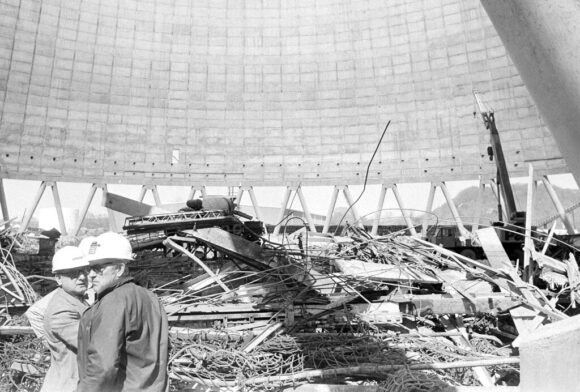
Cooling Tower Scene at Willow Island, West Virginia, 28/4/1978.
51 workers lost their lives
Image: AP/Richard Greenawalt.
Another tragic example was recorded by the U.S. Occupational Safety and Health Administration (OSHA) in New York in 1990, when two window cleaners lost their lives after a suspended scaffold fell due to the failure of a roof-mounted davit. The investigation concluded that neither worker was protected by an independent lifeline—a fundamental safety measure that could have prevented the fatal outcome.
These incidents occurred in countries with some of the world’s most stringent technical standards and safety regulations. They demonstrate that compliant equipment alone is not enough. The safety of any scaffolding system depends largely on the competence of the personnel responsible for erecting, inspecting, and supervising it.
SAFE SCAFFOLDING IS NEVER A MATTER OF LUCK
Many people assume that using certified scaffolding equipment is sufficient to ensure safety. In reality, this is far from the truth.
Even scaffolding manufactured by reputable suppliers can become a serious hazard if it is erected incorrectly. A missing locking pin, an incorrect assembly sequence, the omission of a diagonal brace, or placing adjustable base jacks on unstable ground can significantly alter the load-bearing capacity of the entire structure.
This explains why accident investigations consistently identify human error—not equipment failure—as the primary cause of scaffolding-related incidents.
In offshore facilities, refineries, and industrial construction sites, where work is routinely carried out at significant heights, even minor mistakes can have catastrophic consequences.
SCAFFOLDING INCIDENTS ARE NOT LIMITED TO STRUCTURAL COLLAPSE
When people think about scaffolding accidents, they often picture dramatic structural collapses. In reality, the hazards encountered on a daily basis are far more diverse.
A small gap in a working platform can cause a worker to lose balance and fall from height. A wrench that has not been properly secured can become a dropped object, causing severe injury to personnel working below. An inadequately anchored scaffold may sway excessively under strong winds, increasing the risk of structural instability.
The common factor behind these incidents is that they are largely preventable—provided that the personnel responsible for erecting and inspecting scaffolding have received proper training.
TRAINING PROVIDES MORE THAN THE ABILITY TO ASSEMBLE SCAFFOLDING
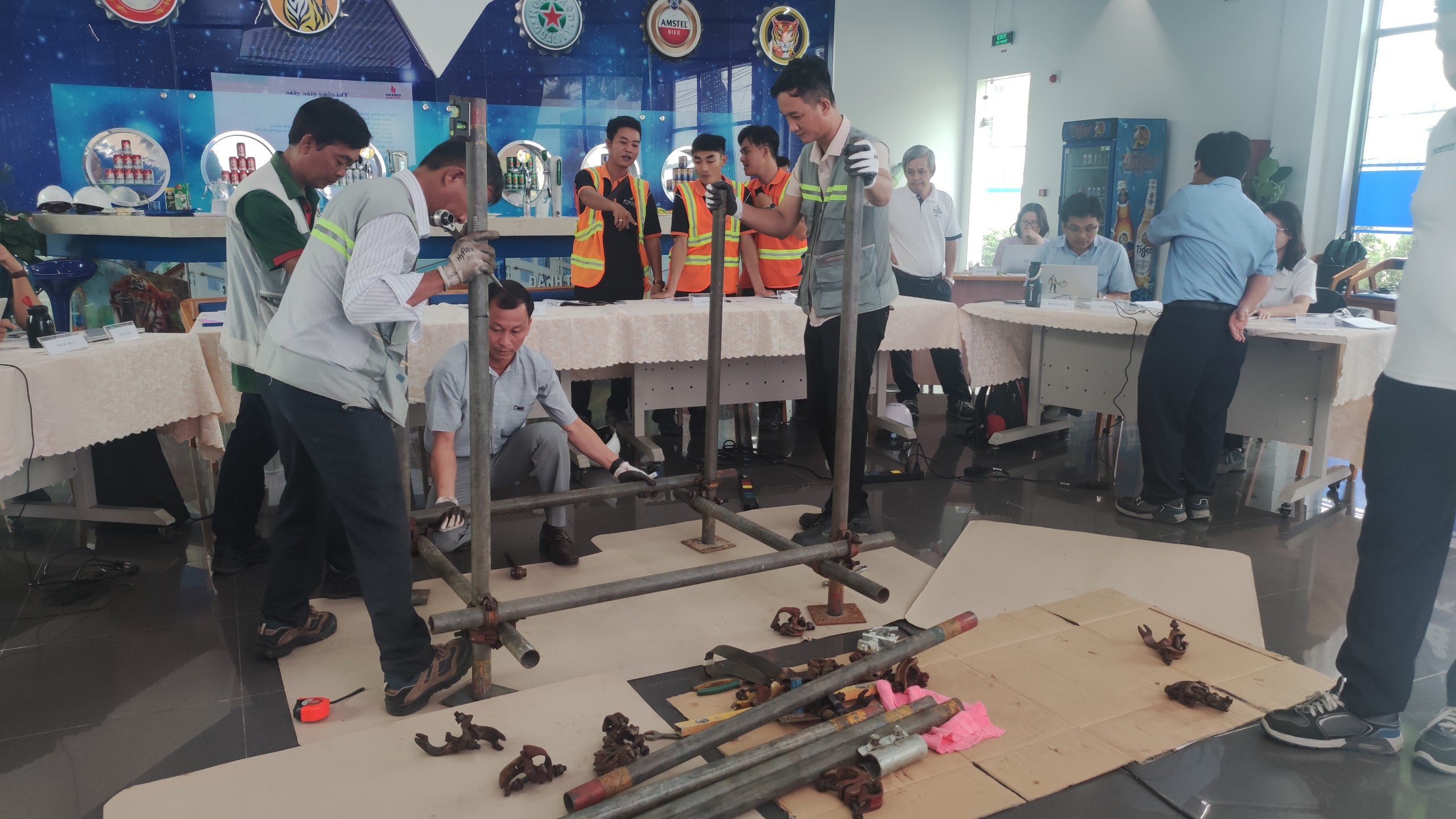
Many workers can learn how to assemble scaffolding simply by observing experienced colleagues on site. However, understanding why each component must be installed in a particular way, why additional bracing is necessary, or when a scaffold should be taken out of service requires structured professional training.
A properly trained scaffolder does more than follow procedures. They understand how to assess whether the foundation can safely support the intended load, identify early signs of structural instability, calculate safe working loads, inspect anchoring systems, and detect hidden defects before they develop into serious accidents.
In other words, they do not simply erect scaffolding—they actively manage risk.
THE COST OF TRAINING IS ALWAYS LOWER THAN THE COST OF AN ACCIDENT
For any organization, a scaffolding accident involves far more than worker injuries. It can result in project delays, accident investigations, equipment damage, compensation costs, legal liabilities, and long-term reputational damage.
By investing in training, companies develop a workforce that understands procedures, recognizes hazards, and proactively controls risks before incidents occur.
This is why many organizations in the oil & gas, energy, construction, and industrial sectors consider scaffolding training an essential part of their workforce competency development programs.
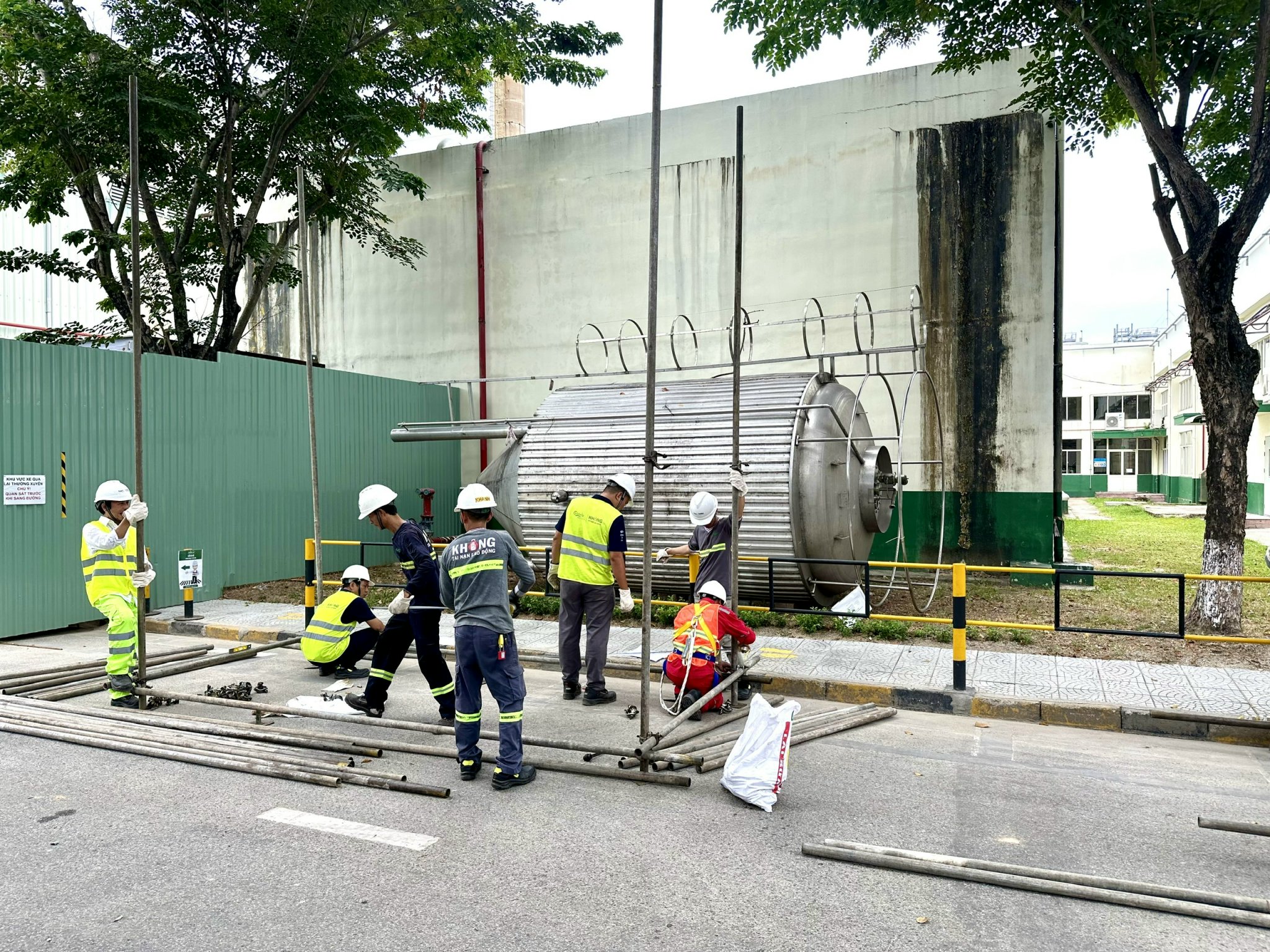
PVD TRAINING – DEVELOPING COMPREHENSIVE SCAFFOLDING COMPETENCY
PVD Training offers a comprehensive Scaffolding training pathway designed to support both individual career development and corporate safety management objectives.
- Scaffolding Basic
- Scaffolding Intermediate
- Scaffolding Advanced
- Scaffolding Inspection
- Scaffolding Supervisor
Our training portfolio includes Scaffolding Basic, Scaffolding Intermediate, and Scaffolding Advanced programs for personnel directly involved in scaffolding erection and dismantling. We also provide Scaffolding Inspection training for inspectors responsible for evaluating scaffold integrity and compliance, as well as Scaffolding Supervisor programs for personnel responsible for planning, supervising, and managing scaffolding activities on site.
All courses are developed using a Competency-Based Training (CBT) approach, combining classroom instruction, practical exercises, and reali78stic workplace scenarios commonly encountered in the oil & gas, energy, construction, and industrial sectors.
Participants gain not only the technical skills required to erect, dismantle, and inspect scaffolding safely, but also a thorough understanding of the underlying causes of scaffolding failures. This enables them to identify hazards proactively and implement effective risk control measures before incidents occur.
At PVD Training, our objective extends beyond helping participants complete a course or obtain a certificate. Our mission is to develop competent professionals who can work safely, comply with international standards, and contribute to reducing workplace accidents across every project.
Because in scaffolding safety, a properly erected scaffold does more than protect the people working on it—it safeguards project schedules, construction quality, and the reputation of the entire organization.
- MAJOR EMERGENCY MANAGEMENT & OIM CONTROLLING EMERGENCY ASSESSMENT OPITO APPROVED (MEMIR) (05 ngày)
- Công ty CP Đào tạo Kỹ thuật PVD cần tuyển dụng chức danh ĐỐC CÔNG
- Công ty CP Đào tạo Kỹ thuật PVD (PVD Training) cần tuyển dụng chuyên viên đào tạo ( Đợt 2 )
- Safe Driving at Work: Why Training Matters
- Chúc mừng các học viên của PVD Training đã hoàn thành khoá học FOET OPITO, TFOET OPITO ngày 29/4/2022 theo tiêu chuẩn quốc tế OPITO