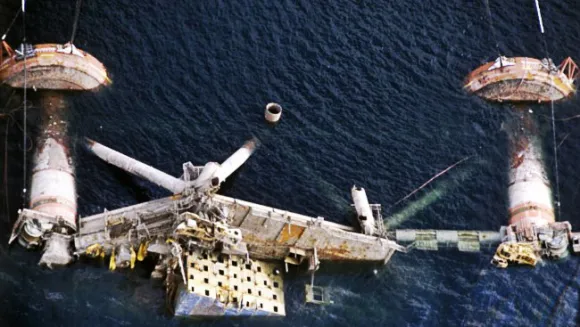

On 8 December 1999, the tanker Erika left Dunkerque, France, carrying about 31,000 tonnes of heavy fuel oil. Three days later, in heavy seas in the Bay of Biscay, the 25-year-old ship broke in two and sank, spilling oil that blackened some 400 kilometers of the French coast — one of Europe’s worst environmental disasters.
The investigation that followed did not find a rogue wave, a navigation error, or an engine failure. The French accident bureau’s report concluded the vessel’s structure was 30–50% wasted by corrosion. Court-appointed experts went further: the sinking was “the inevitable consequence” of severe corrosion inside the No. 2 ballast tanks — tanks whose internal protective coating had been left to deteriorate for years, and whose condition surveyors had failed to properly catch.
Read that again: a 180-meter steel ship was killed by a failed paint system that nobody inspected rigorously enough.
The Erika is an extreme case, but the mechanism is the same one working right now on every offshore platform, storage tank, jacket, and pipeline in Vietnam’s salt air and tropical humidity. Corrosion destroys an estimated US$2.5 trillion of value worldwide every year — roughly 3.4% of global GDP, according to the IMPACT study by NACE International (now AMPP). The first, and often only, line of defense is a coating a few hundred microns thick. And whether that coating survives 2 years or 20 is decided by things no untrained eye can see.
THE TECHNICAL TRUTH: PAINT DOESN’T FAIL — THE PROCESS FAILS
To understand why inspection matters, you need to understand what a coating actually does. Steel corrodes electrochemically: in the presence of an electrolyte (salt-laden moisture is nearly perfect for the job), anodic areas of the steel give up electrons and dissolve into rust. A protective coating works by isolating the steel from that electrolyte — a barrier a few hundred microns thick standing between an asset worth millions and the chemistry that wants to eat it.
That barrier is only as good as the process that created it, and the process fails in ways that are invisible once the topcoat is dry:
- Invisible killer #1 — salt left on the surface. Chloride contamination trapped under a coating draws water through the film by osmosis. The result is blistering and underfilm corrosion months later. It cannot be seen after painting; it can only be tested for before painting.
- Invisible killer #2 — painting over condensation. If steel temperature is too close to the dew point, an invisible film of moisture forms on the surface seconds before the paint lands on it. Adhesion is compromised from day one. The only defense: measuring ambient conditions and refusing to spray outside the specified window.
- Invisible killer #3 — wrong film thickness. Too thin, and the barrier has pinholes and weak spots that become corrosion cells. Too thick, and the film cracks, traps solvent, and delaminates under thermal stress. “It looks well covered” is not a measurement — a dry film thickness gauge is.
- Invisible killer #4 — poor surface profile. Blast too smooth and the coating has nothing to grip; too rough and peaks poke through the film. The profile must be measured against the specification, not judged by touch.
Every one of these failures shares two properties: it is undetectable by eye once the job “looks finished,” and it is cheap to catch at the moment it happens. That is the entire economic case for the coating inspector — a person with the instruments, the standards knowledge, and the authority to stop work at defined hold points. Industry experience consistently attributes the majority of premature coating failures to surface preparation and application errors, not to the paint itself.
Repainting a structure in service costs many times the original application — add scaffolding or rope access, production shutdown, and offshore logistics, and one skipped inspection step becomes among the most expensive mistakes on a project. The Erika shows the other end of the scale: sometimes the price is not measured in money.
A COATING IS ONLY AS GOOD AS ITS INSPECTION
Anyone can look at fresh paint and call it beautiful. A coating inspector looks at the same surface and asks the questions above — with instruments, against numbers written in a specification.
This is exactly what international standards from NACE (now AMPP) and SSPC define: measurable acceptance criteria for every stage of the coating process, from surface cleanliness grades to environmental limits to final film testing. Companies that own steel assets increasingly refuse to accept coating work that is not inspected against these standards — because, like the Erika’s owners and surveyors, someone always eventually pays the price of unverified work.
WHO NEEDS THIS COMPETENCE
- Painting and blasting technicians who want to move up from applying coatings to inspecting them — a step change in career value
- QA/QC personnel on fabrication yards, new-build projects, and maintenance campaigns
- Maintenance engineers and supervisors who approve coating work by contractors
- HSE and integrity teams responsible for corrosion protection of tanks, pipelines, structures, and offshore facilities
- Anyone preparing for a longer-term path toward international coating inspector certification
THE COURSE: PAINTING & COATING INSPECTION TO NACE STANDARDS
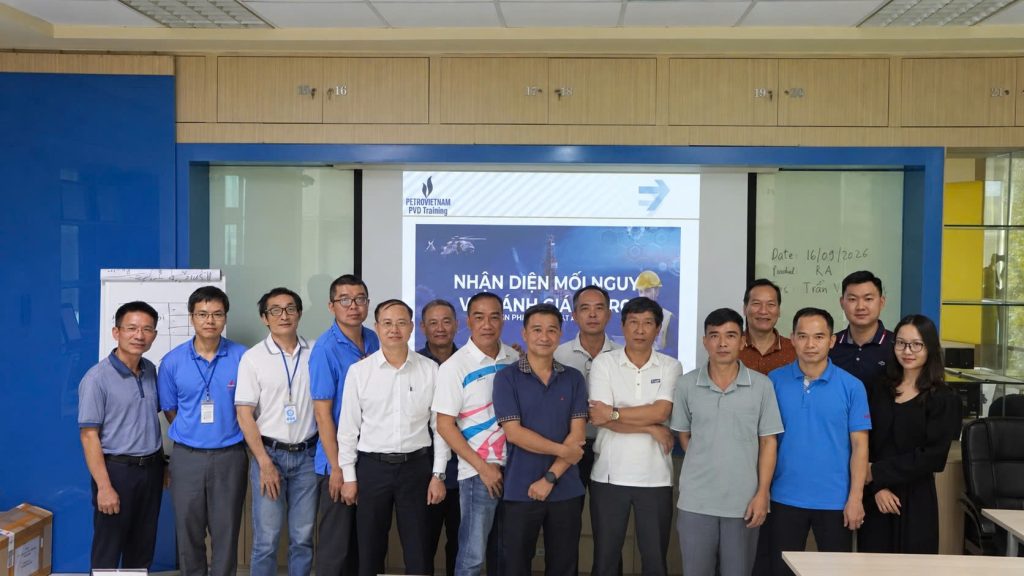
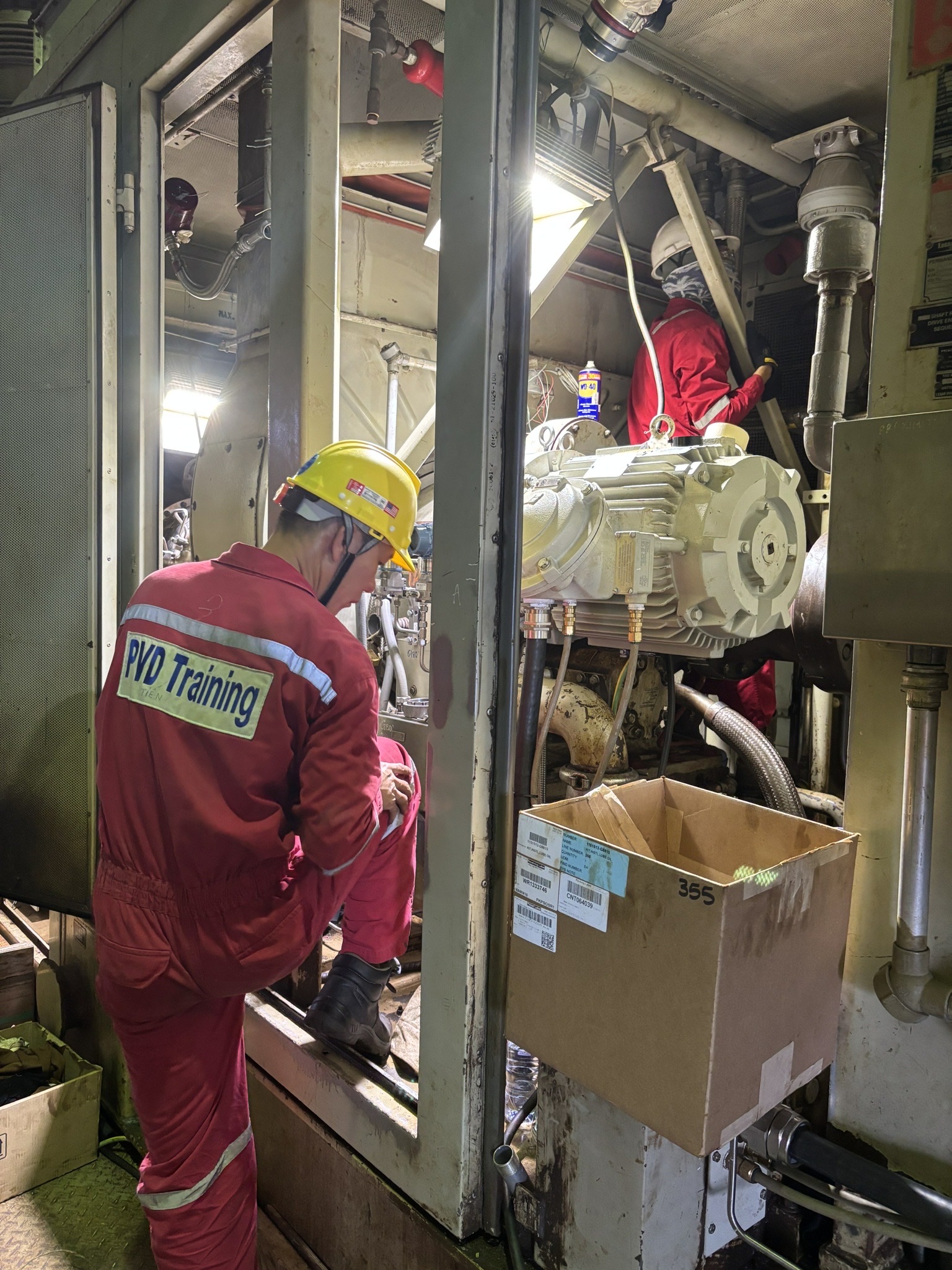
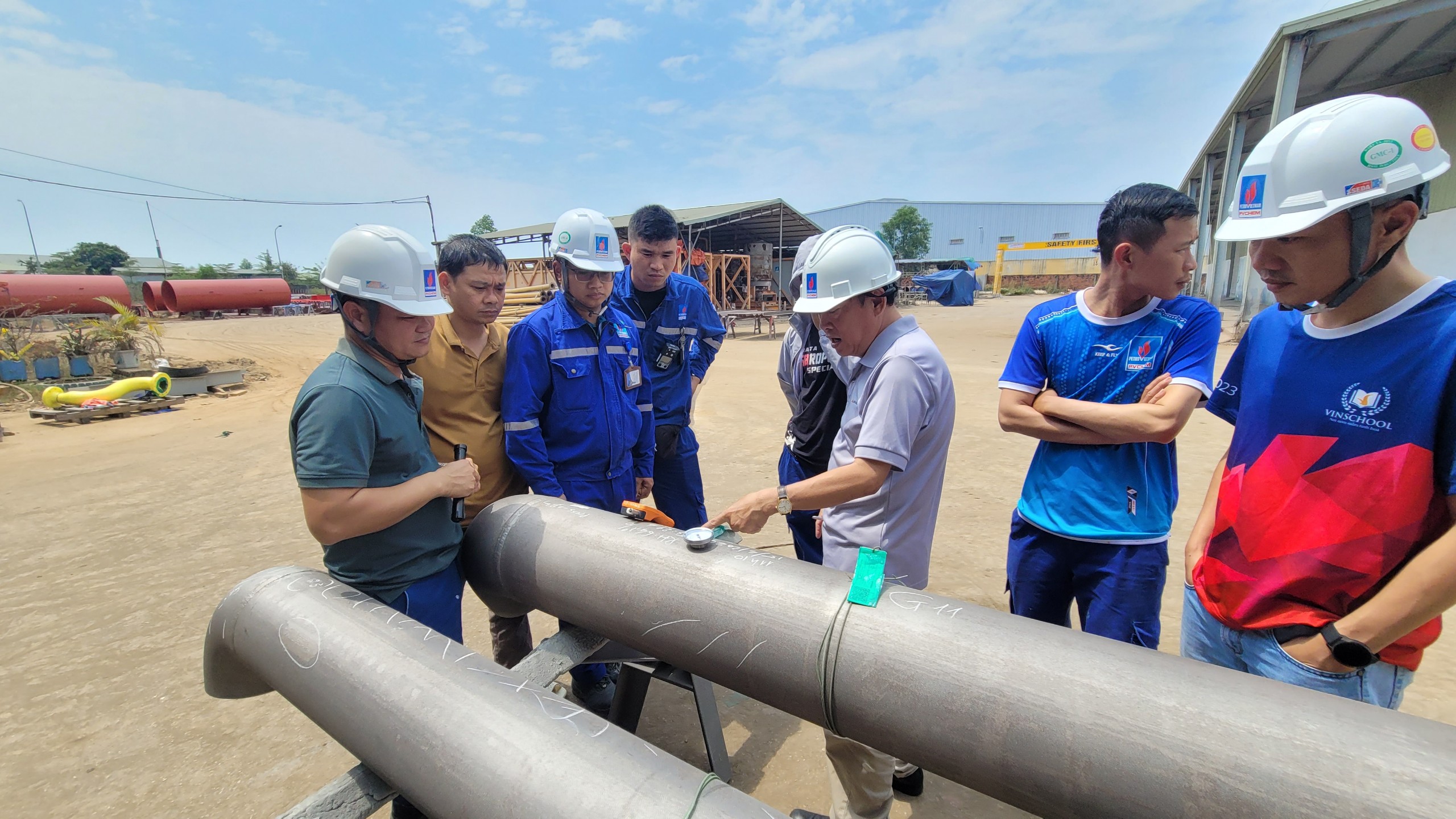
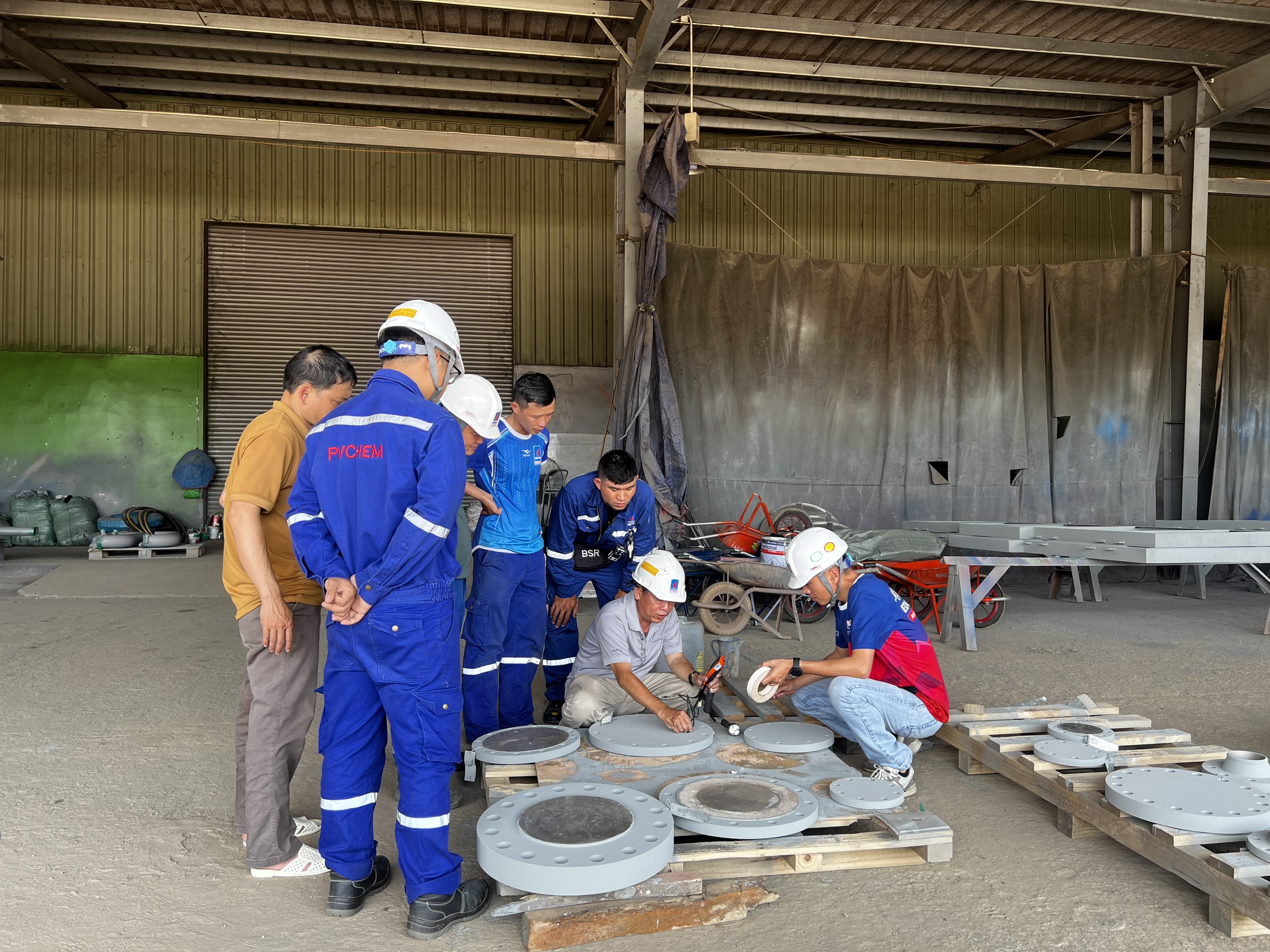
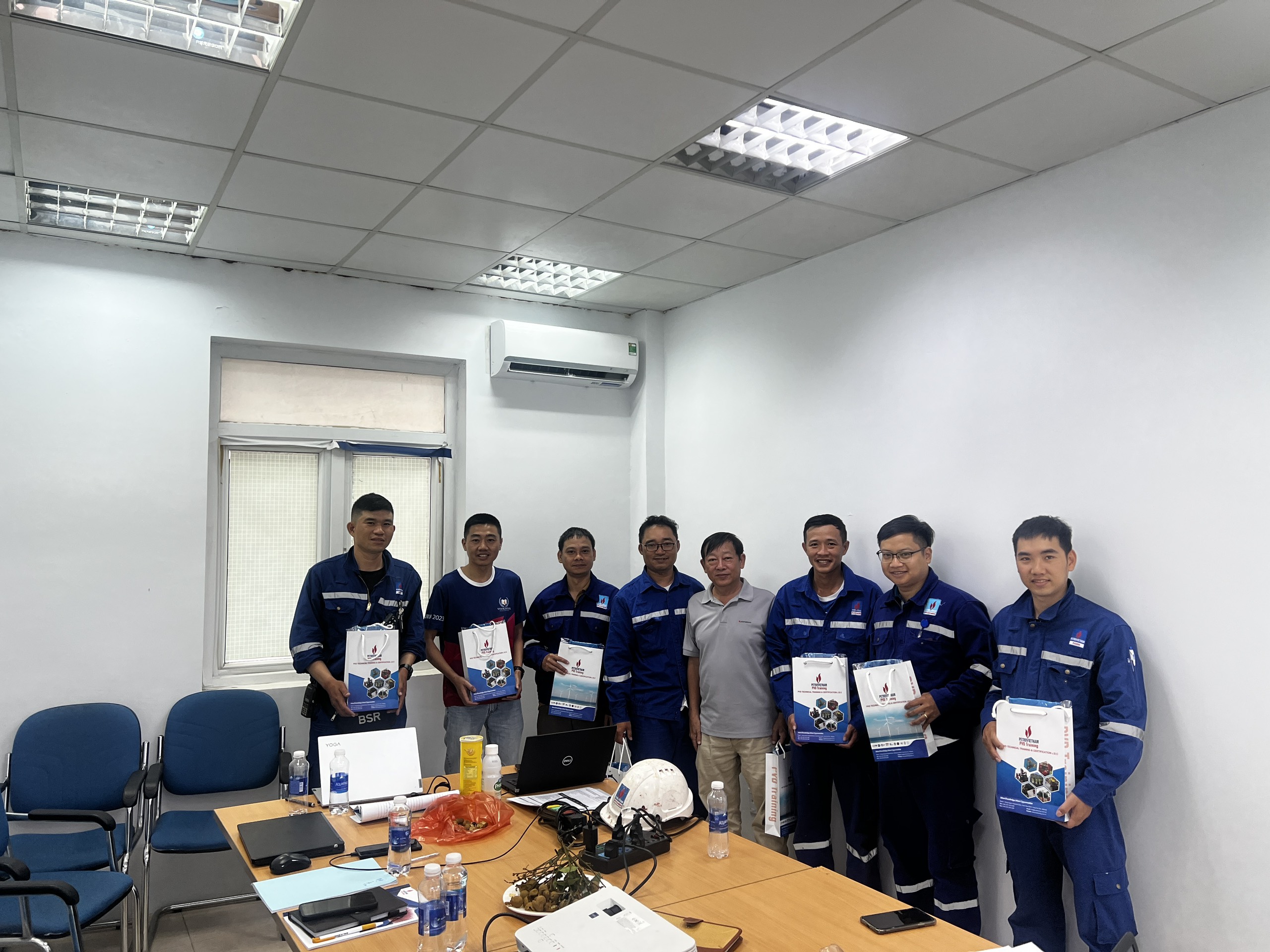
PVD Training delivers a hands-on Painting & Coating Inspection course built around NACE/AMPP and SSPC standards — the same reference framework used in coating specifications across the oil and gas, marine, and industrial sectors. The course has been delivered for major industry clients, including PV Chem (Quang Ngai, 2024).
Day 1 – Fundamentals of Protective Coatings
- Introduction to protective coating systems and corrosion.
- Coating technology and coating classification.
- Relationship between corrosion and protective coatings.
- Product datasheets (PDS), Material Safety Data Sheets (MSDS/TDS), and coating materials.
- Surface preparation standards and methods.
- Surface contaminants and cleanliness requirements.
- Coating application techniques and industry standards.
- Common coating-related factors and case studies.
Day 2 – Coating Application & Quality Control
- Common coating defects and failures.
- Causes of coating deterioration and methods to minimize failures.
- ISO 12944 requirements for corrosion protection of steel structures using paint systems.
- Coating systems for different industrial environments.
- Environmental conditions affecting coating performance.
- Practical case studies and group discussions.
Day 3 – Coating Inspection Practice
- Introduction to coating inspection and the role of a coating inspector (QA/QC).
- Inspection standards and quality requirements.
- Inspection equipment and practical use, including:
- Wet Film Thickness Gauge (WFT)
- Dry Film Thickness Gauge (DFT)
- Surface Profile Gauge
- Surface Temperature Thermometer
- Psychrometer
- Adhesion Tester
- Holiday Detector
- Gloss Meter
- Surface Cleanliness Test Kits
- Environmental monitoring instruments
- Hands-on coating inspection exercises.
- Final practical assessment.
- Course examination and qualification.
WHY LEARN IT AT PVD TRAINING
- Practical, instrument-in-hand training — not a slideshow. Delegates practice with the same gauges and test methods used on real projects.
- Instructors with real oil & gas and industrial project experience in Vietnam’s operating conditions.
- Training aligned with NACE/AMPP standards — the language of every serious coating specification worldwide.
- Delivered at our Vung Tau facility or at your site, in Vietnamese or English, for companies and individual learners.
- A logical next step alongside PVD’s Corrosion Management in Oil & Gas course — build a complete asset-integrity skill set.
WHAT CHANGES FOR YOU AFTER THE COURSE
For a technician, inspection competence is the difference between being paid to hold a spray gun and being paid to sign a report. Inspection roles carry more responsibility, more trust, and more earning power — and they exist on every fabrication yard, every maintenance campaign, and every offshore project in Vietnam.
For a company, one trained inspector on site means coating defects get caught at the hold point, not at the warranty claim. The course fee is repaid the first time someone stops a crew from painting over a contaminated surface.
Corrosion never takes a day off. The question is whether anyone on your team is trained to see it coming.
- OPITO Rigger Initial Training Vietnam: 5 Reasons Offshore Workers Must Take This Course
- Feedback GWO 11-2022
- Tuyển dụng Kỹ Sư Điện, Kỹ Sư Cơ Khí và Tự động hóa
- Painting & Coating Inspection (NACE Standard) for PV Chem in Quang Ngai Province (14-16/03/2024)
- Công ty Cổ Phần Đào Tạo Kỹ Thuật PVD (PVD Training) chính thức được kết nạp là Hội viên tổ chức của Hội Dầu Khí Việt Nam