
Just a few minutes of panic at sea can turn a minor incident into a serious emergency.
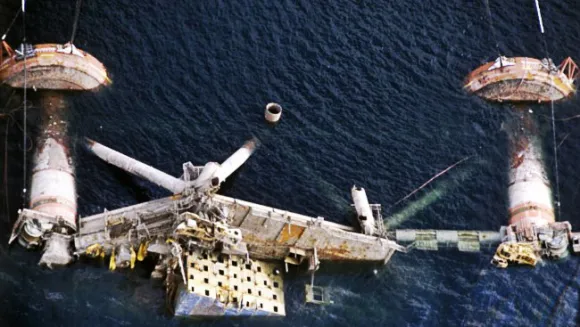
In recent years, a number of unfortunate maritime accidents have been reported. This raises an important question for companies with personnel working offshore:
If a member of your team accidentally falls overboard, do they know what to do in those critical first few minutes?
The answer does not depend on luck. It depends on whether they have received the right training.
Just a few minutes of panic at sea can turn a minor incident into a serious emergency.
In recent years, a number of unfortunate maritime accidents have been reported. This raises an important question for companies with personnel working offshore:
If a member of your team accidentally falls overboard, do they know what to do in those critical first few minutes?
The answer does not depend on luck. It depends on whether they have received the right training.
WHY ARE SEA SURVIVAL SKILLS SO IMPORTANT?
For personnel working on drilling rigs, offshore installations, service vessels, cargo ships, or passenger vessels, a Man Overboard situation is one of the most dangerous emergencies they may face.
In many cases, survival does not depend solely on how quickly rescue teams arrive. It also depends heavily on the casualty’s response during the first few minutes.
A properly trained person will know how to:
- Stay calm and avoid panic.
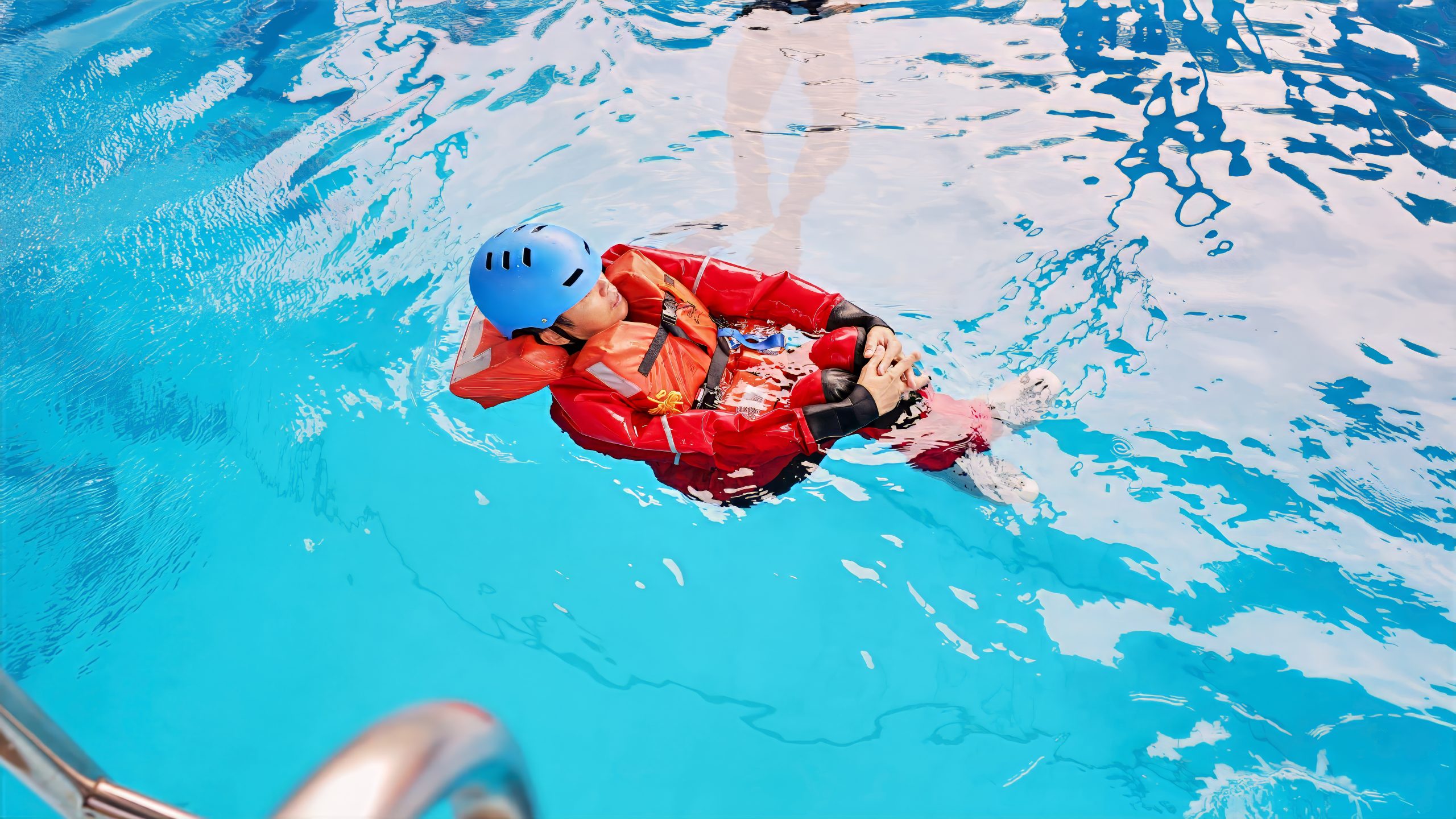
- Adopt an appropriate floating position to conserve energy.
- Quickly locate and hold on to the nearest flotation device.
- Minimize body heat loss to extend survival time in the water.
These are not instinctive skills. They need to be developed through practical training so that individuals can respond correctly even under intense psychological pressure.
That is also the purpose of the Sea Survival Training course.
SEA SURVIVAL TRAINING COURSE CONTENT
The course is designed for personnel working on:
- Mobile Offshore Units (MOU)
- Offshore drilling rigs
- Oil & gas service vessels
- Ships and other marine vessels
Duration: ½ day, including theory and practical training
Prerequisite: None
Key topics include:
- Identification and use of Life Saving Appliances (LSA)
- Deployment and use of lifebuoys and flotation devices
- Principles of survival at sea
- Actions in a Man Overboard situation
- Muster Station procedures
- Evacuation methods from vessels or offshore installations
- Life raft survival techniques
- Self-protection techniques while in the water
- Basic principles of marine rescue
BENEFITS OF INVESTING IN SEA SURVIVAL TRAINING
Sea Survival Training not only helps personnel meet the requirements of working in marine and offshore environments, but also equips them with valuable skills that can be applied throughout their lives.
Sea survival knowledge can be useful in many real-life situations, including marine travel, tourism, outdoor activities, or emergencies involving water.
The training helps participants to:
- Improve their ability to respond effectively during emergencies.
- Increase safety awareness in offshore working environments.
- Remain calmer when dealing with real incidents.
- Reduce risks to themselves and their colleagues.
Upon successful completion of the program, participants will receive a Sea Survival Training Certificate issued by PVD Training.
CORPORATE TRAINING REGISTRATION
PVD Training provides Sea Survival Training through both public courses and customized in-house training for companies, with flexible scheduling to suit each organization’s operational requirements.
PVD Training & Industrial Solutions J.S.C
📍 Dong Xuyen Industrial Zone, Rach Dua Ward, Ho Chi Minh City
☎ (+84) 254 3612 099
📱 Hotline: 0943 147 916
✉ info@pvdtraining.com.vn
- Sudden Cardiac Arrest During Exercise: What You Need to Know So You Don’t Become a Bystander
- Từ vụ cháy chung cư mini 56 người chết, cần làm gì để thoát hiểm khẩn cấp?
- PVD TRAINING tuyển dụng số lượng lớn các vị trí cho dự án Đại tu nhà máy lọc hóa dầu Nghi Sơn – Thanh Hóa
- Thư chúc mừng của PVD Training nhân ngày Quốc tế Phụ nữ
- Our Journey at OGAV 2023 Expo