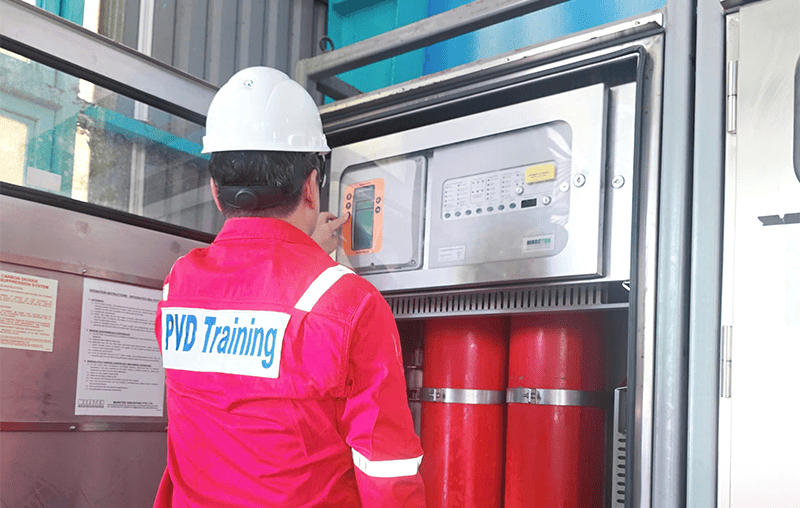

In industries such as oil & gas, chemicals, cold storage, food processing, fertilizers, and energy, NH3 (Ammonia) is one of the most widely used chemicals due to its high efficiency in refrigeration and industrial production. However, alongside its operational benefits come serious risks to safety, health, and the environment in the event of leaks or chemical incidents.
This is also why Chemical Emergency Response has increasingly become a mandatory requirement for companies that use or store NH3.
What is NH3?
NH3 (Ammonia) is a colorless gas with a strong, pungent odor that is easily recognizable. In industrial operations, NH3 is commonly used in:
- Industrial refrigeration systems
- Fertilizer plants
- Chemical manufacturing plants
- Cold storage and food processing facilities
- Industrial processing and energy systems
Under normal conditions, NH3 is lighter than air. However, when liquefied and released into the environment, it can rapidly form a toxic gas cloud capable of spreading over a wide area.
How Dangerous is NH3?
NH3 is highly toxic and can directly affect:
- Respiratory system
- Eyes
- Skin
- Lungs
At low concentrations, NH3 exposure may cause:
- Eye irritation, breathing difficulties, and throat/nose irritation
- Coughing, headaches, and reduced concentration
At higher concentrations, it may lead to:
- Chemical burns
- Acute pulmonary edema
- Loss of consciousness
- Fatality after short-term exposure
Particularly concerning is NH3’s ability to disperse rapidly depending on wind direction and weather conditions. In major incidents, toxic gas clouds may spread beyond plant boundaries and directly impact nearby communities.
Numerous chemical incidents around the world have demonstrated that even a small leak, if not controlled promptly, can result in:
- Evacuation of residential areas
- Plant shutdowns and operational disruption
- Severe human and property losses
- Long-term environmental impacts
Why Do Companies Need a Chemical Emergency Response Team?
In incidents involving NH3, response time is critical.
A properly trained emergency response team can:
- Quickly identify the severity of the hazard
- Isolate and control the leak area
- Deploy appropriate protective equipment
- Conduct safe rescue and evacuation operations
- Minimize the risk of toxic release spreading into the community
- Support operational continuity
Emergency response personnel require not only theoretical knowledge but also realistic hands-on training in scenarios closely resembling actual industrial incidents.
This is especially important because chemical emergency environments often involve:
- High psychological pressure
- Limited visibility
- Toxic atmospheres
- The need for rapid and accurate decision-making
Without adequate practical training, incorrect response actions can escalate the severity of an incident.
PVD Training – Chemical Emergency Response Training & Simulation Provider
To support companies in strengthening chemical emergency response capability, PVD Training has developed the Chemical Emergency Response training program, focusing on NH3-related incidents and hazardous chemical scenarios in industrial environments.
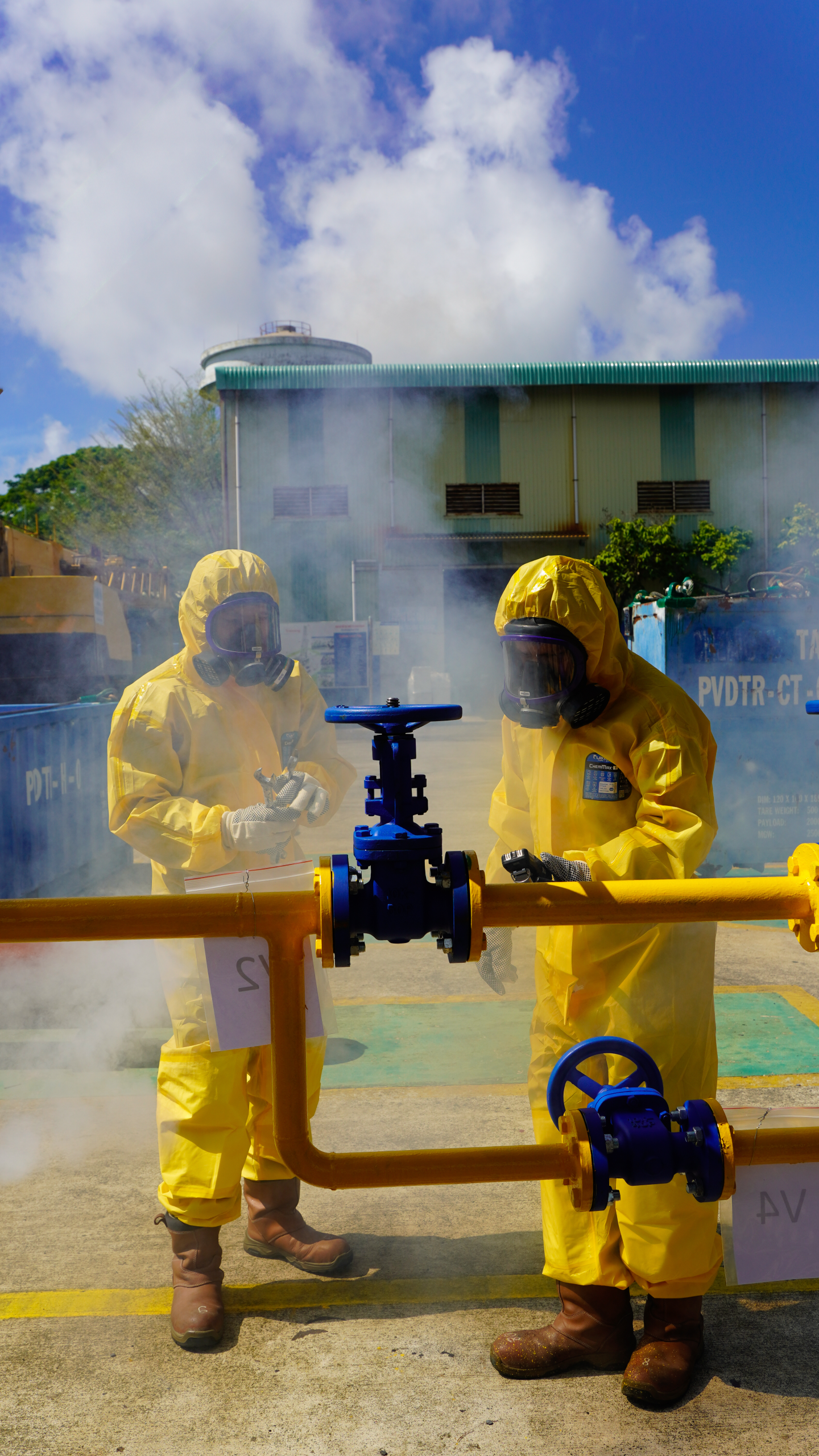
PVD Training provides realistic training facilities and emergency response simulation systems that allow participants to:
- Practice in near-real operational environments
- Become familiar with leak response procedures
- Use specialized protective equipment
- Conduct rescue and evacuation drills
- Perform gas detection and atmospheric monitoring
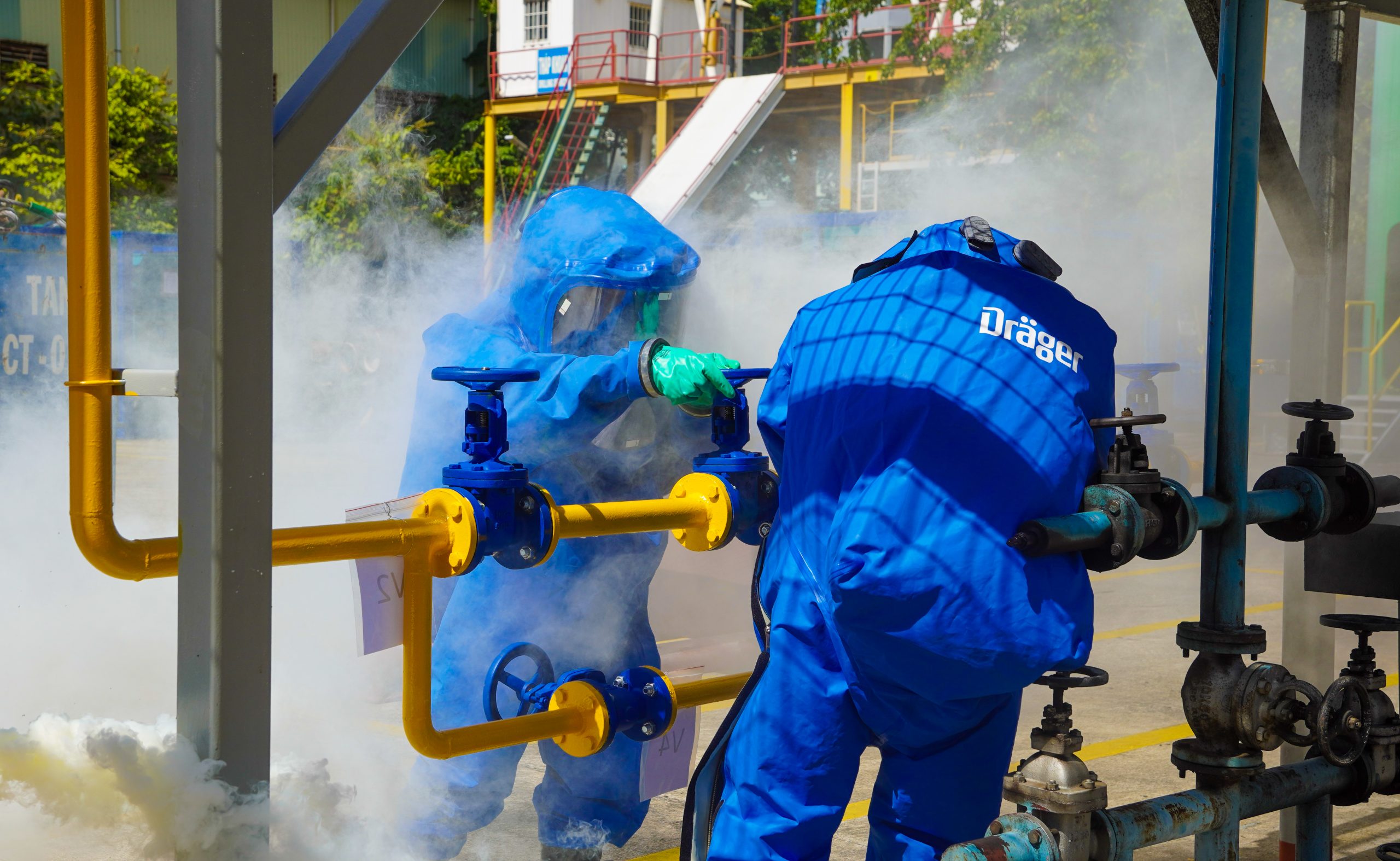
In particular, the practical training system utilizes specialized equipment from Draeger — one of the world’s leading brands in gas detection and respiratory protection — enabling participants to experience realistic industrial operating conditions within the oil & gas and chemical sectors.
With experienced instructors and modern simulation facilities, PVD Training aims to support companies in:
- Enhancing emergency response capability
- Minimizing chemical-related risks
- Improving safety for personnel and surrounding communities
- Meeting HSE and emergency preparedness requirements in modern industry
As chemical safety requirements continue to become more stringent, investing in emergency response capability is no longer only about compliance — it is a critical factor in protecting people, assets, and corporate reputation.
- Công ty Cổ Phần Đào Tạo Kỹ Thuật PVD (PVD Training) chính thức được kết nạp là Hội viên tổ chức của Hội Dầu Khí Việt Nam
- Feedback GWO 4-2025
- Feedback GWO 02-2024
- Khóa học: Hoàn thiện và nâng cao kiến thức cơ bản trong lĩnh vực Dầu khí
- PVD Training cảm ơn học viên đã tham gia Khóa học Helicopter Landing Officer