
SAFE DRIVING IS NEVER A MATTER OF LUCK
Most professional drivers believe an accident will not happen to them. They have years behind the wheel, they know the roads, and they have never had a serious incident. But experience without structured training builds habits — and not all habits are safe ones.
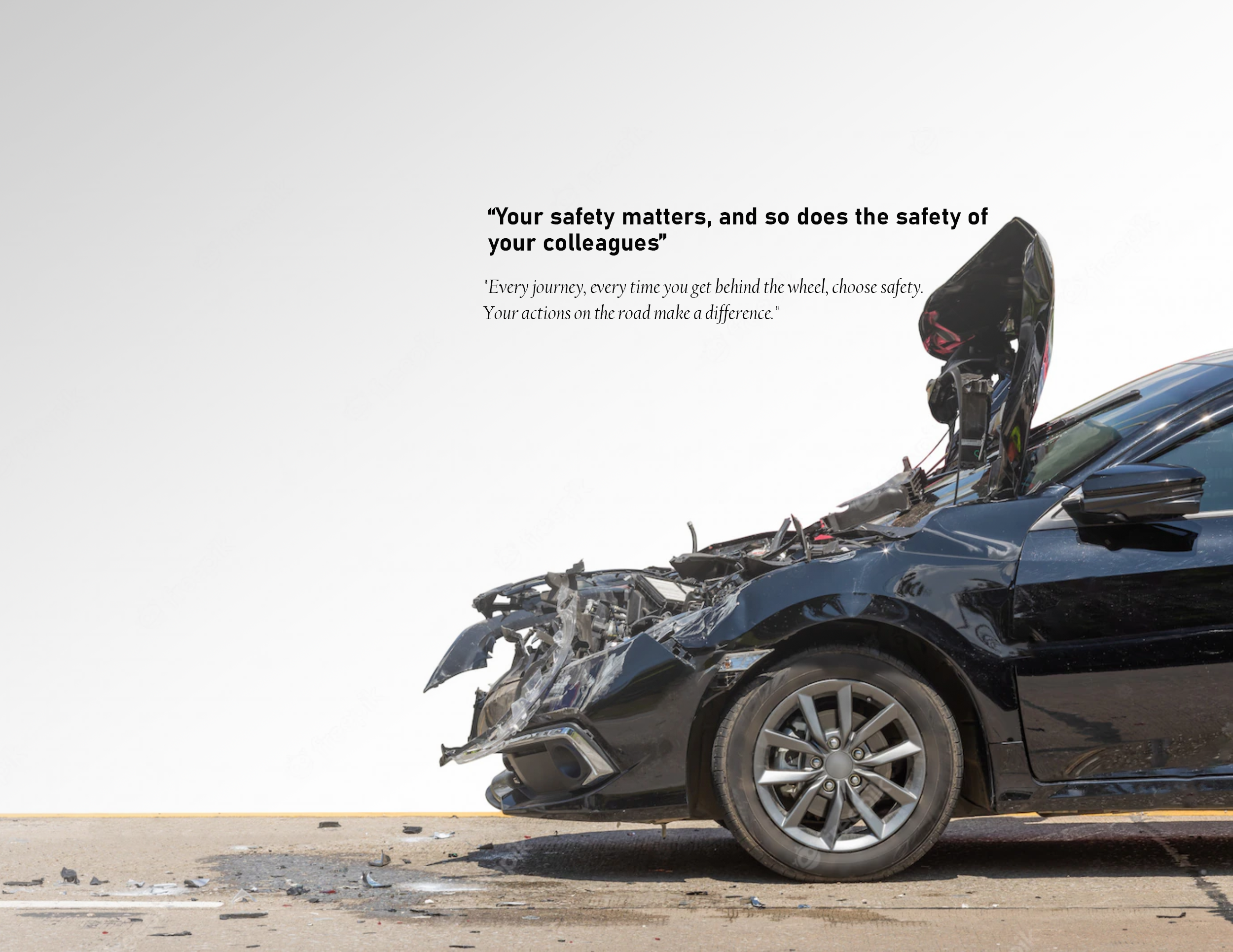
A glance at a phone at 60 km/h means driving blind for more than 30 meters. A following distance that feels “normal” in city traffic leaves no margin when a motorbike cuts across a truck’s path. A journey that starts late and runs behind schedule quietly pressures a driver into speeds and overtaking decisions they would never consciously choose.
None of these are equipment failures. Like the vast majority of scaffolding accidents, the vast majority of road accidents come down to human factors: fatigue, distraction, poor journey planning, and gaps in hazard awareness. And that is precisely why they are preventable.
A DRIVER’S LICENSE PROVES YOU CAN DRIVE. IT DOES NOT PROVE YOU CAN DRIVE SAFELY FOR WORK
A national driving license confirms a person can operate a vehicle and knows the traffic rules. It says nothing about whether they can manage a long journey on unfamiliar industrial roads, assess a vehicle before departure, respond correctly to the hazards of a plant environment, or apply defensive driving techniques under real commercial pressure.
This is the gap the OPITO Safe Driving at Work Training and Assessment Standard was created to close. OPITO — the global safety and skills body for the energy industry — designed this standard as the minimum benchmark for anyone who drives on company business: employed drivers in the plant or on public roads, personnel who drive company vehicles as part of their job, and locally hired drivers under company responsibility.
When a company puts its drivers through OPITO Safe Driving at Work training, it is not paying for a certificate. It is buying down its single largest transport risk.
WHAT THE COURSE COVERS
The OPITO Safe Driving at Work course at PVD Training is a one-day programme (7 hours 20 minutes) combining classroom theory with a practical, assessed driving session. The course consists of three modules:
Module 1 — Driving Safety
- Local driving-related laws and regulations
- Driving hazards and vehicle safety features
- Traffic systems and road layout
Module 2 — Driver Journey Management
- Journey management and vehicle checks
- Defensive driving techniques
Module 3 — Driving Performance
- Practical driving session, assessed by direct observation
The theoretical elements are assessed through a short open-book written test, and the practical elements through direct observation of the delegate’s driving. Theory can be delivered in the classroom or by computer-based training (CBT).
Prerequisite: a driver’s license valid in the location where the training is delivered. OPITO recommends refresher training and assessment every two years.
WHY COMPANIES SEND THEIR DRIVERS TO THIS COURSE
- It targets the industry’s number one killer. Land transport is the leading cause of fatalities in oil and gas operations. This course addresses that risk directly, at its source: driver behaviour and journey planning.
- It meets a recognised international standard. OPITO approval means the training is delivered, assessed, and audited against a globally accepted benchmark — evidence that stands up in client audits, contractor prequalification, and incident investigations.
- It builds defensive drivers, not just compliant ones. Delegates learn to anticipate hazards, manage speed and following distance, and plan journeys so that schedule pressure never makes decisions for them.
- It creates a consistent driving culture. When every company driver has been through the same standard, supervisors can set, measure, and enforce a single expectation for road safety.
- One day of training versus the cost of one serious accident. A road accident involves far more than vehicle damage: injured personnel, lost workdays, investigations, compensation, legal liability, and reputational harm with clients. The comparison is not close.
WHAT DELEGATES TAKE AWAY
For the individual driver, the course delivers practical value they use on every journey — including the drive home to their family:
- A structured method for checking a vehicle before every journey, instead of trusting that “someone else looked at it”
- Journey planning skills that remove time pressure — the silent cause behind speeding and dangerous overtaking
- Defensive driving techniques for Vietnam’s real traffic conditions: dense motorbike traffic, mixed-speed roads, and industrial zones
- A clear understanding of local driving laws and regulations, reducing both accident and compliance risk
- An OPITO-recognised training record that travels with them throughout their career in the energy industry

TRAIN WITH PVD TRAINING — OPITO-APPROVED IN VIETNAM
PVD Training delivers the OPITO Safe Driving at Work course at our facility in Dong Xuyen Industrial Zone, using approved vehicles and dedicated roads for the practical assessment. As one of Vietnam’s leading providers of internationally accredited safety training for the oil and gas and industrial sectors, we train the people your operations depend on — from the rig floor to the road.
Every driver in your fleet believes they are a safe driver. One day of structured training and assessment turns that belief into verified competence.
Because on the road, as on the scaffold, a small mistake can lead to serious consequences.